It loads too slowly
A few seconds on a phone and they are already gone, on to whoever opened first.
The cost
You paid for the visit, then lost it.
You paid for the visit, then lost it.
A site that gets found, looks like you, and makes getting in touch obvious
Your website is the only part of your business that works nights, weekends and public holidays. Or it should.
Most sites just sit there looking tidy while the phone stays quiet. Yours is built in code rather than assembled from a template, written in your words, and put together so the next step is never a guess.
You own it outright when it launches. The code, the domain, the content, all of it.
Not ready to start? Ask for the free presence audit. We look at what a customer would find and send you what we found. It costs nothing and there is nothing to sit through.
Where it goes wrong
You have probably had a website before, and maybe you paid good money for it. It never brought you a job. That is the story we hear most, and sites fail for the same handful of reasons every time.
A few seconds on a phone and they are already gone, on to whoever opened first.
The same layout as a thousand other businesses, with stock photos of people who have never set foot in your trade.
Someone ready to call has to scroll back up and hunt for a number. A good share of them simply do not bother.
No traffic in means no calls out. If your pages are not built so search engines can read them, the right people never see you at all.
Forms quietly break and pages stop working after an update. Nothing announces a lead that never arrived.
A logo and a big photo do not book anything. Somewhere there has to be an obvious next step, and on most sites there simply isn’t one.
None of these are your fault, and none of them are a taste problem. They are the ordinary consequences of a site built to be looked at rather than used, and every one of them can be fixed on purpose.
You have probably been here: you paid for a site, it looks fine, and the phone stays quiet. Enquiries trickle in, or people leave before they ever find your number.
People decide in seconds. So the top of the page makes three things obvious: who you are, what you do, and how to reach you.
Nobody should have to hunt for your number. Every screen keeps the next step within reach, because most of the people looking at your site are holding a phone.
People hire businesses they trust, and your website is where that gets decided, usually before anyone speaks to you.
Someone finds you, believes you, and gets in touch. But not everyone who lands on your site wants the same thing, so the next part is designing for whoever is actually on the page.
See how your site is doingSomeone with a problem right now is nothing like someone pricing a big job, or someone reading at lunch who is not ready to call anyone. A template builds one page for all three and hopes. We design for each.
Wants to reach you immediately. Speed and a visible phone number are everything. No patience for digging.

Wants to research and trust first. They need to see the quality of your work, and to feel they are not taking a risk with a large amount of money.
Not ready to contact anyone. They are working out what their problem even is, and quietly forming a view on who seems to know what they are doing.
That is what a custom design actually means. Not a prettier template, but pages built around how people really decide, which is why a serious site is never just a homepage.
See what a build includesWhat we commit to
A website that only looks good is a brochure nobody asked for. Here is what you get from us in plain words, and what we will not do.

“I build these myself, so the promises above are mine to keep rather than a policy someone hands you. If a website is not the right thing for you yet, I would rather tell you that now.”
Real pages, real depth
Search engines rank pages, not businesses, and people read before they call. A single page has one answer to give. A site built properly has a page for each thing you do, each kind of customer you do it for, and each question they ask on the way.
Someone searching for one specific job should land on a page about that job, not a list where it is the fourth bullet. Each one names the work, answers the obvious questions, and makes the next step plain.
If someone can buy four different things from you, four pages beat one list. Each gets the room to explain itself, and each becomes its own way in from a search.
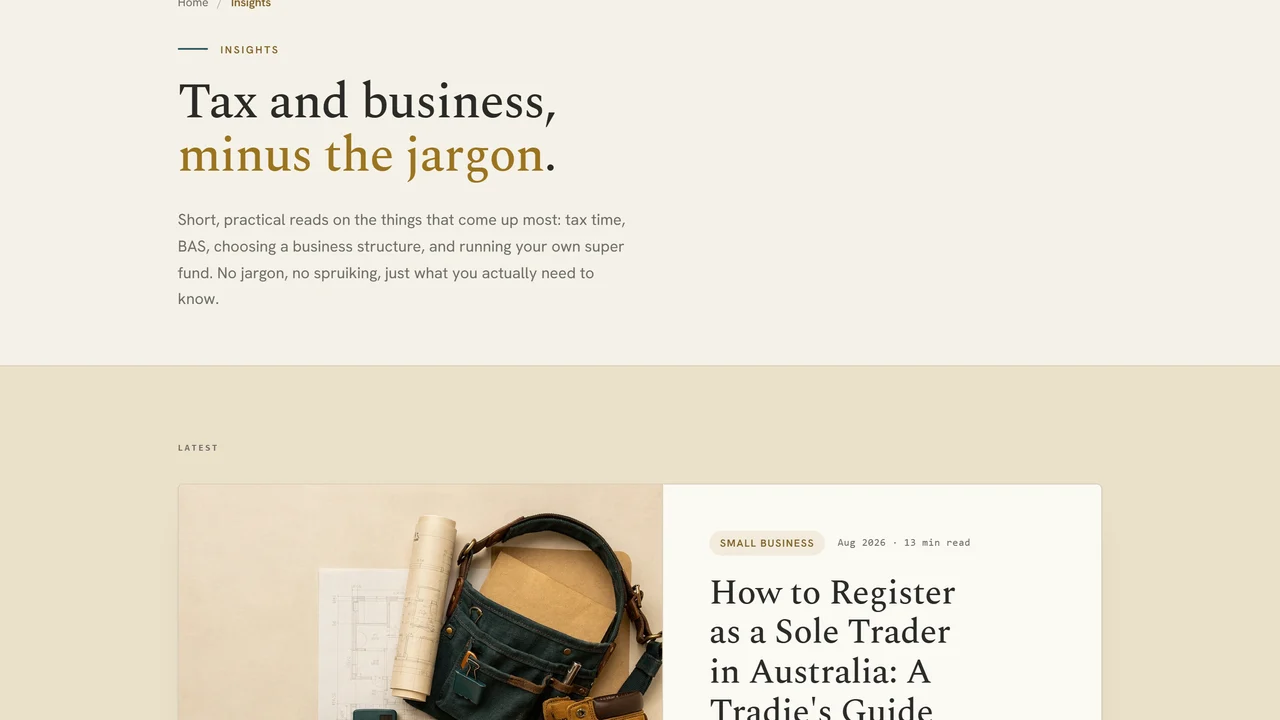
People search the question long before they search for you. Answering it properly is how they arrive already trusting you, and it keeps bringing people in long after it is written.
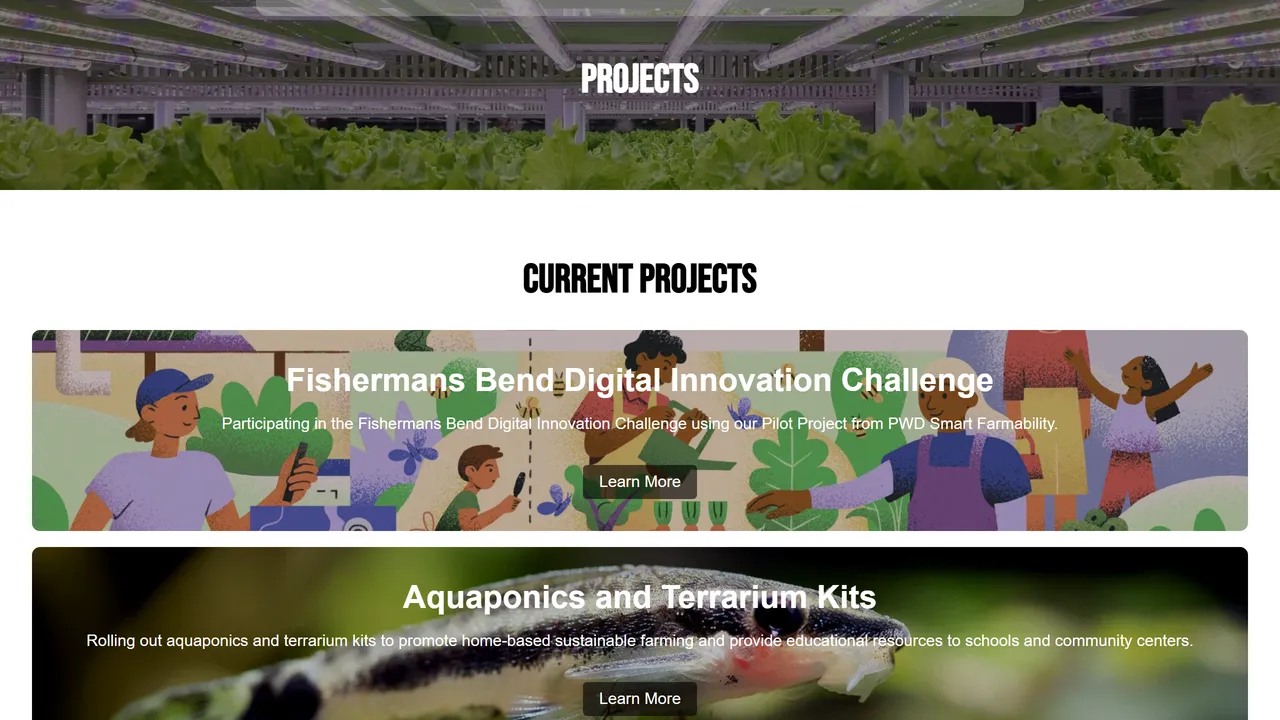
Showing the actual work does the arguing for you. It is the difference between saying you are good at something and letting someone see it, which is what people are really checking before they call.
Every page is another way in. Not more pages for the sake of it, but one for each real thing a customer might be looking for when they go searching.
See what a build includesAnd it does not stay that size. If you take the search work with us we write and publish five posts a week, every week, and each one is another way for someone to arrive.
Five a week is twenty-one to twenty-two a month, and 260 across a year. Where the first month lands, and where twelve months land, so you can check the arithmetic yourself.
This is what gets written, not what it earns. We will not put a traffic or ranking number on a graph, because nobody honest can promise one. What we can commit to is the work: five posts a week, published, every week.
Built for you, not off a shelf
Most small business web design is one template with a new logo dropped on top. That is why so many sites in the same trade feel interchangeable. Here is a real rebuild: the same firm’s site before they came to us, and the one we built.
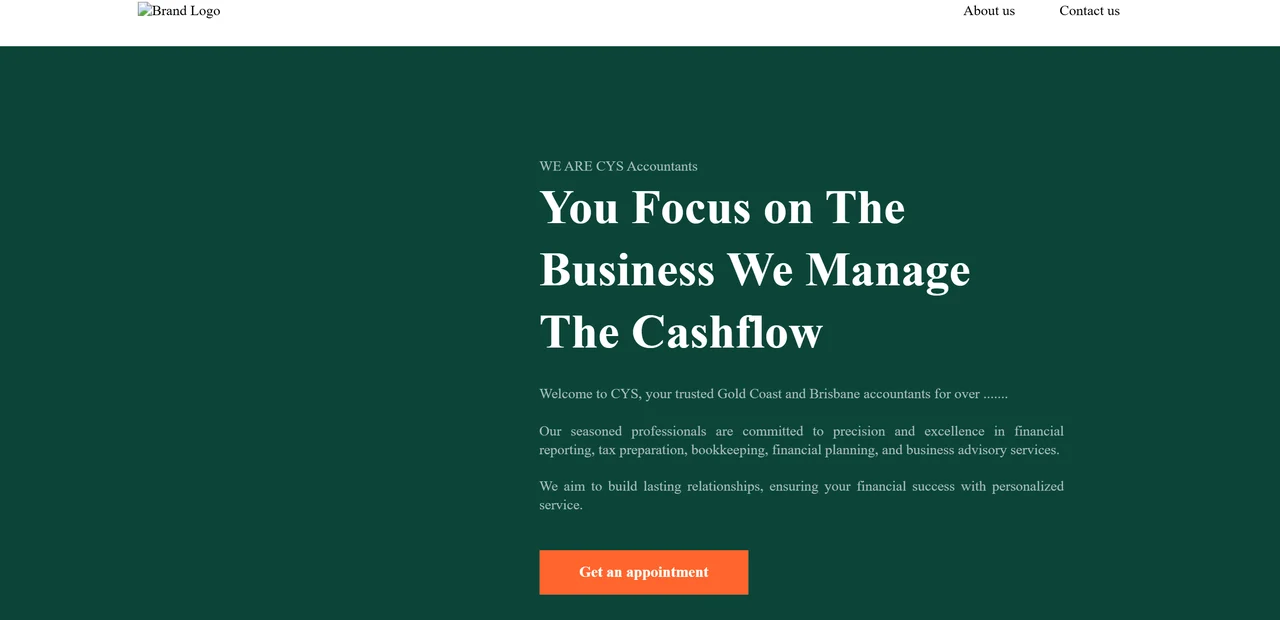
The old site: unfinished, and hard to trust. A logo that never loaded, a sentence that trails off mid-thought, and two links in the whole navigation.
The rebuild. A real navigation, a headline that says who they are and where they work, and one obvious next step on the first screen.
No template, and no layout lifted off the last build. We take inspiration, then draw something that is yours.
Not an account manager relaying messages. You talk to whoever is doing the work.
We go through what the other results in your area are doing, so yours is built to stand apart from them.
Layout, colour, the order of the sections, the words themselves. All decided for your business, none inherited from a theme.
No professional photos? That is fine. A custom site is a two-way build, and the more you hand over the more it sounds like you. We will tell you exactly what to send and make the most of whatever you have. If you have nothing at all, we work with that too.
If you run ads
You pay the same for the click either way. Send it to a homepage and it lands on a page built to serve everyone, so the person has to work out where to go next. Send it to a page built for the thing they searched, and there is nothing to work out.
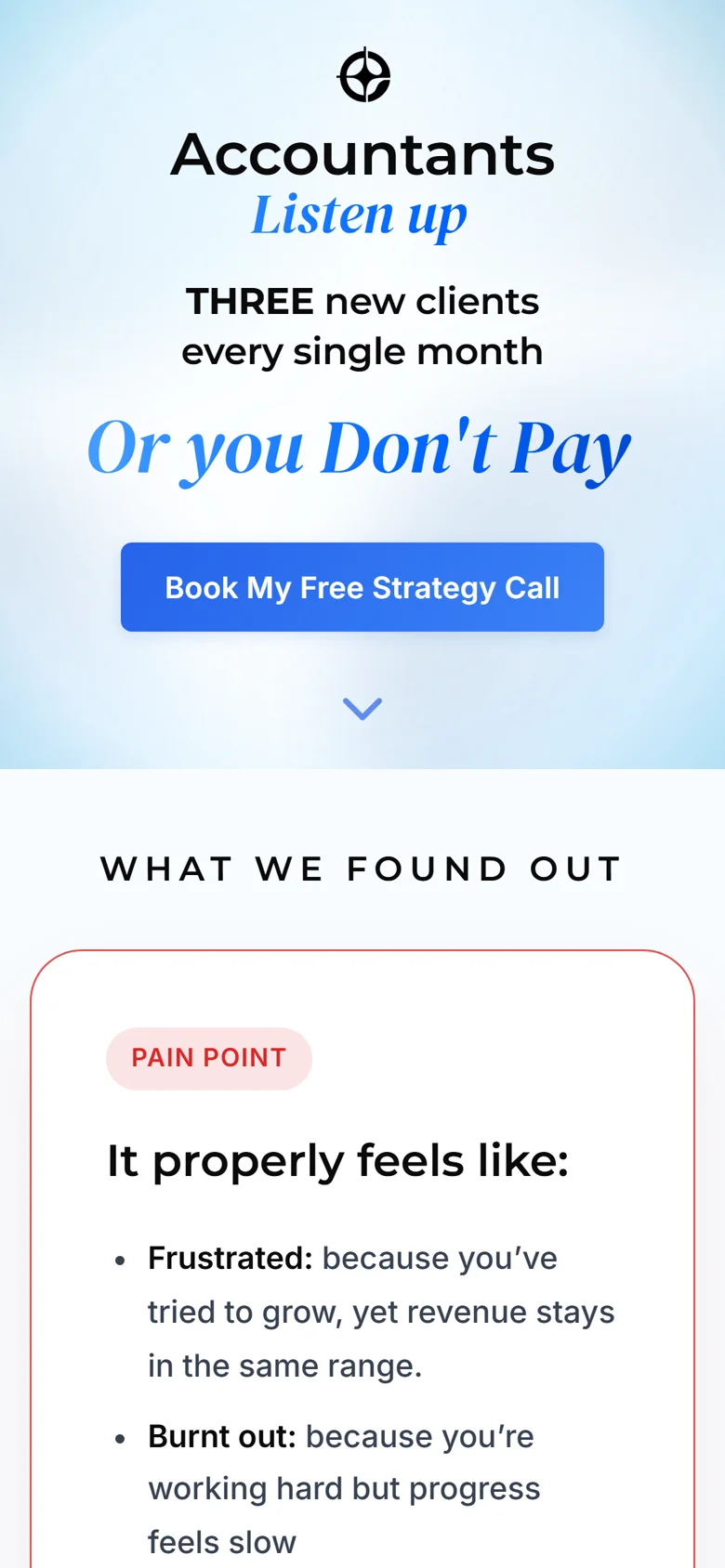
The first screen asks for one thing. No menu across the top, no other offers down the side, and nothing to scroll past before the button. Whoever clicked the ad can act without reading the whole site first.
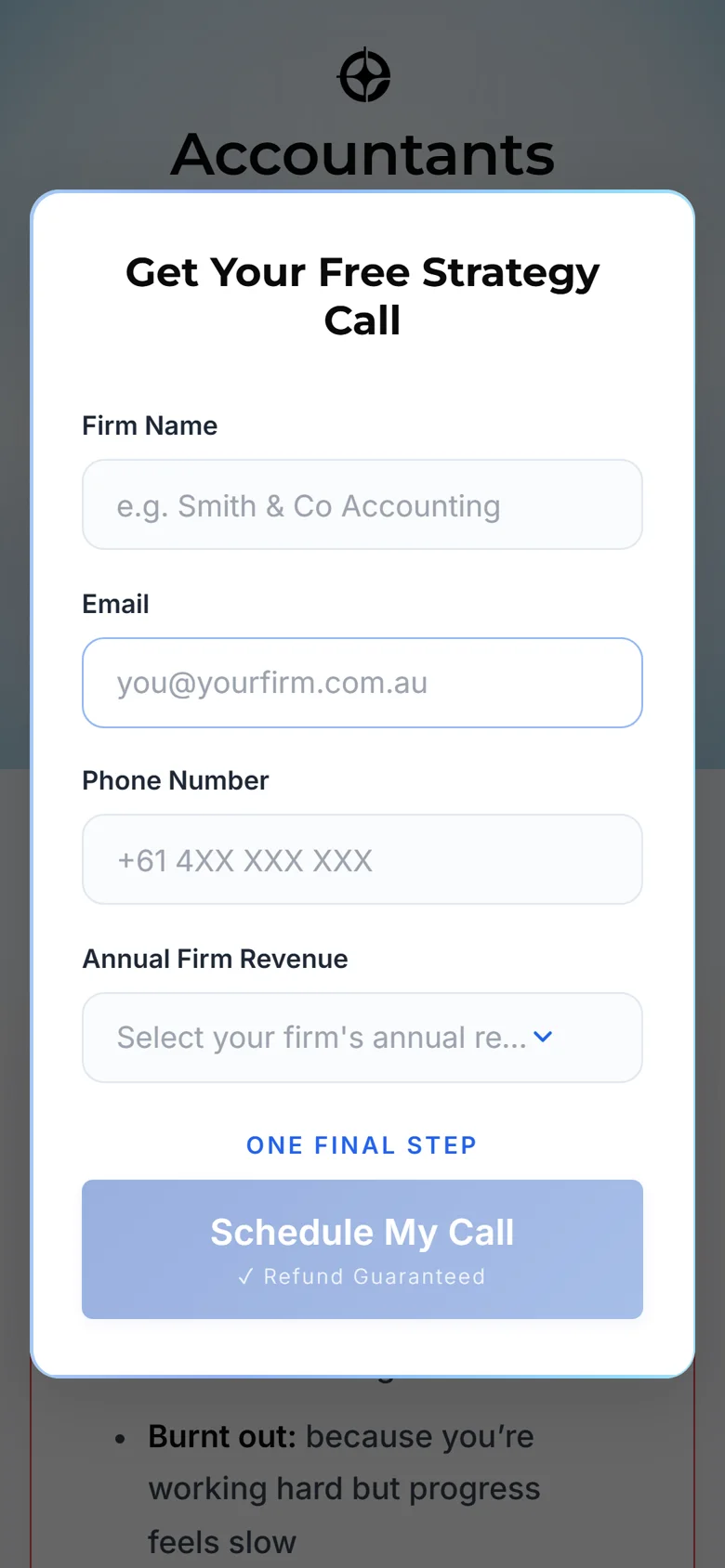
Then the form is short on purpose. Four fields and one button, so the step after the click is small enough that people actually finish it. A long form here is where paid traffic quietly leaks away.
Whatever the ad promised is the first thing on the page, in the same words.
No menu to wander into, no other offers competing. The next step is the only step.
The reasons to trust you sit next to what you are asking for, not on a page nobody clicked.
This is a page on its own, not a section of your site. It is the same argument as the build above, applied to traffic you paid for: the click costs the same either way, so what it lands on is the whole decision.
See the Presence PageHow fast it loads on a phone
People leave before it finishes loading, and search engines take the speed into account when deciding who to show. It is not a thing you add at the end either. It comes from how the site is built, which is why ours are written in code rather than assembled from plugins.
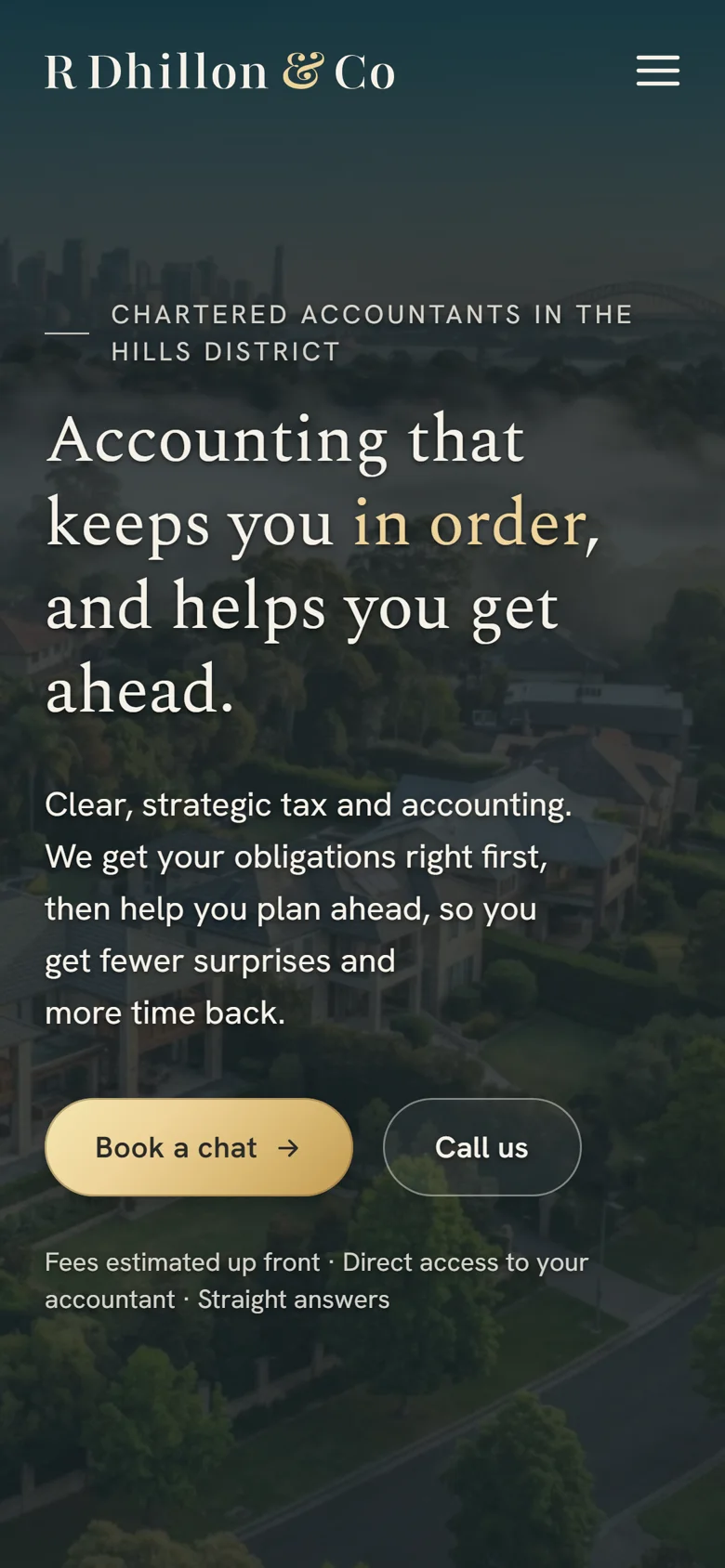
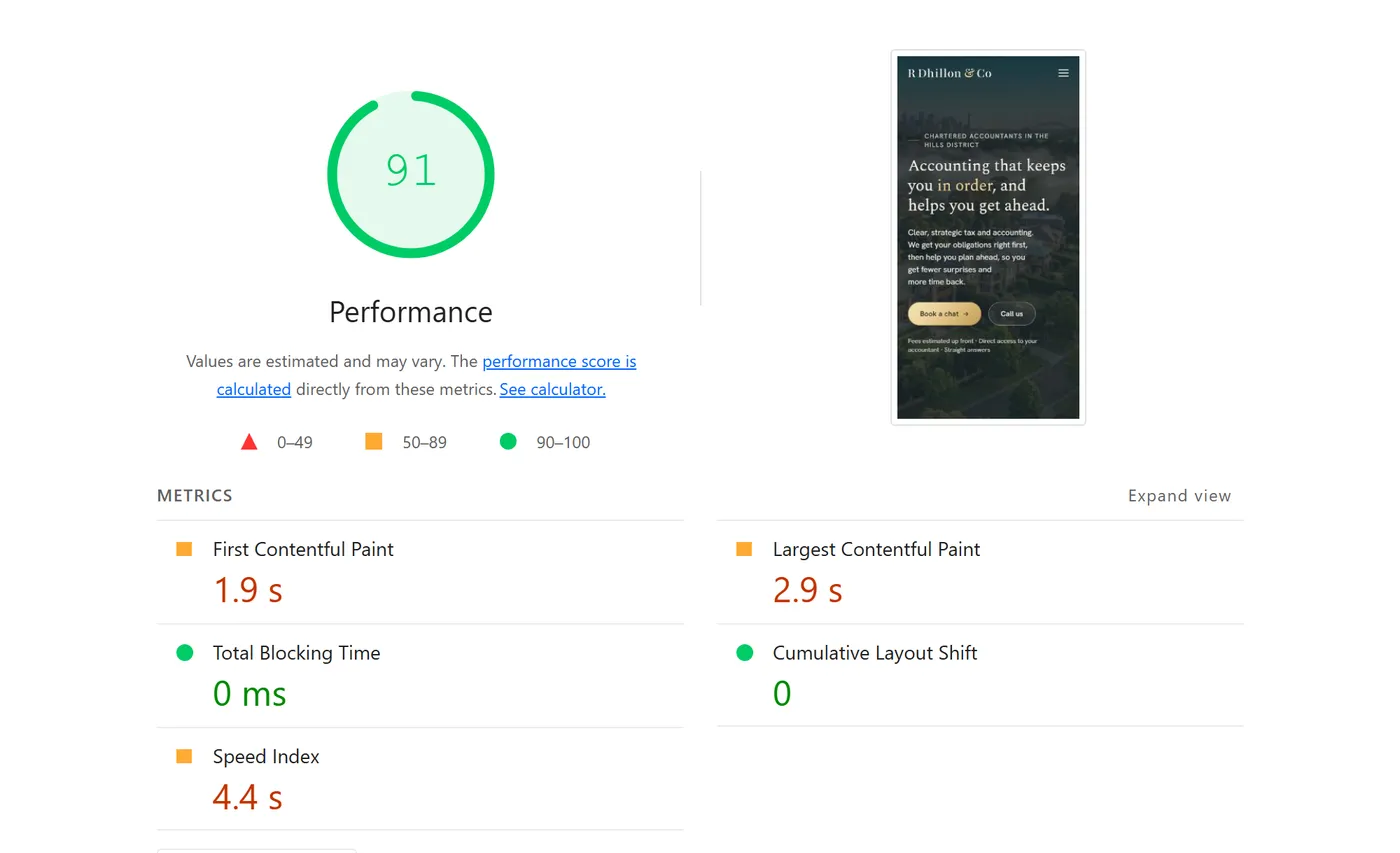
Most people looking for a local business are on a phone, often standing somewhere inconvenient. So it is designed for thumbs first, then widened, with its own layout where a phone needs a different one from a desktop.
A site that looks right on a laptop but struggles on a phone does not just frustrate people, it quietly drags the rankings down with it. The phone version is the one that gets judged, so it is the one we build first.
A billboard in the desert helps nobody
A site nobody finds is a billboard in the desert. One you cannot measure is a guess you keep paying for. Both are decided while the thing is being built, not afterwards.
The website and being found are the same project, so this is done during the build, not sold to you again later.
This is the part most agencies skip entirely. You stop guessing whether the site works. You watch it work.
One place of your own where the enquiries land: who got in touch, when, and which page they came from, alongside the calls the site produced. It is built by us rather than rented from a platform, it comes with every plan, and it is the answer to "how do I know any of this is working". We are still building it out, so more will appear here over time. The picture below is a drawing of the idea, not a screenshot: we would rather show you nothing than dress up numbers that are not real.
The benefit is simple: you stop guessing. Enquiries over time, where each one came from, and the calls the site produced, all in one place that is yours to open on any given Tuesday.
What it asks of you
You are running a business. You do not have weeks to spend managing a web project, and you should not have to. Here is the honest split of who does what.
Photos and any video of you, your team and the work. The facts of the business: how long, what you do, who for, anything you are accredited in. And quick feedback at a few points, from one person who can make the call.
We work out what the site has to do, design it, write it, build it in code, launch it and wire up the tracking. You get a planned launch date at the start and we hold ourselves to it. That is it. You stay on the tools.
This is what carrying the build actually produced. The firm came to us with the kind of site most agencies ship: a template layout, a logo that never loaded, and a first screen that gave a visitor nothing to do. We rebuilt it from scratch: branded to them, fast, phone-first, and built around one job, turning a visitor into an enquiry.
BeforeA template doing nothing in particular: no clear headline, two links in the navigation, and no reason to stay.
AfterBranded to them, with a clear headline, a real navigation, and the way to get in touch on the first screen.
You send the photos and the facts up front, then stay on the tools. That is the whole ask. We carry the design, the words, the build and the launch, and you get a planned date you can hold us to.
The biggest fear people have with an agency is simple: what if I leave, do I lose everything? It is a fair question, and the answer is that the website was yours the whole time.
It is registered in your name and your business pays for it, so the address people find you at is never something we hold. Nothing about the site is parked on an agency account waiting to be released.
Built in code rather than assembled in a page builder, so what you get is a set of files that keeps working wherever you put them, not a licence that stops the day you leave.
No buy-out, nothing heldIf you do not want to stay on a maintenance plan, that is a decision you are allowed to make. The website is already yours and leaving does not cost you anything. There is no lock-in and nothing to buy back.
Cancel the plan with thirty days' notice, keep the domain, the code, the words and the images. Any prepaid months you have not used come back to you.
Leaving is free, but a website you cannot drive is not much use. If you want it, we set the whole thing up under your own accounts and teach you how to run it.
Why this one comes first
Ads send people to it. Search sends people to it. Your Google listing sends people to it. The work you put into being visible all arrives at the same place.
Every dollar you spend on being seen ends its journey on this site. A weak website quietly taxes all of it: the ads cost the same, the ranking work costs the same, and fewer of the people they bring in ever call.
Which is why we would rather fix this before selling you anything that drives traffic to it. Spending more to send people somewhere that loses them is an expensive way to find out.
See how the pieces fit togetherTwo we built
One needed the phone to ring. The other needed to exist believably before walking into a room full of investors. Same job underneath, different reason for doing it.
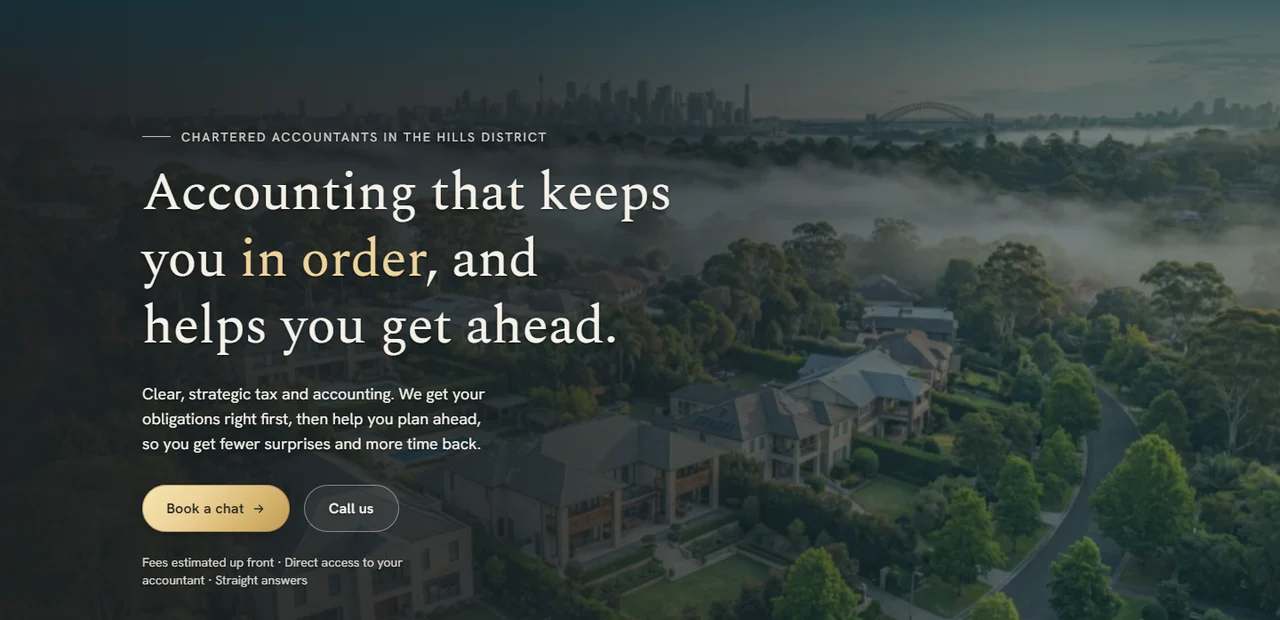
An established firm whose reputation travelled by word of mouth and stopped there. We built the site around how the firm actually works: a page for each service, a page for each kind of client, and articles answering what people ask before they ring.
Read the case study
The founder had no website at all and was going overseas to present the business to potential investors. He needed somewhere that showed it was a real operation before the meeting, not after it. That is a different job from getting the phone to ring, and it needs the same thing underneath.
Read the case studyBoth are live and you can click through them. We would rather show you the sites than quote you a number you have no way of checking.
What it costs
A website is part of three of our products, and these are them. The ranges below are the same ones published everywhere else on the site; the exact number gets fixed in writing once we know your scope, before anything starts, and it does not move after that.
One page, built to catch the enquiry
$1,000 to $2,000 one-off build, ex GSTFor a business that needs a real front door fast, or a landing page to point ads at.
The full site: brand, pages and follow-up wired in
$3,500 to $6,000 one-off build, ex GSTMost builds land in this band, scoped to your business rather than to a package.
Everything as one program, the website included. It is being built now, so there is no figure on it yet.
Talk to us about itNone of this is bundled shut. Any one of these can be done on its own, and what it costs depends on your business, so there is no rate card to quote from. Tell us which one and you get a fixed number before anything starts.
Every one of these is quoted, not listed. Email us what you are after, or book a call and we will price it properly.
Book a call for a quoteQuestions
Straight answers, written down so you do not have to ask them on a call.
You get a planned launch date at the start and we hold to it. What we will not do is quote everyone the same number of days before knowing what they need, because a one-page site and a site with thirty pages are not the same job. Timelines also depend on what is already booked, and if now is not open we will say so rather than squeeze you in badly.
Yes, and not in a technical sense that falls apart when you read the contract. The domain is in your name from day one. The site and its code become yours on the final payment. There is no buy-out price, because nothing is being held back to sell you later.
Yes. We set up the parts you will actually want to change (your text, your photos, your hours, new pages) so you can edit them without touching code or breaking the layout. If you would rather not, send it to us and we will do it.
Not always. Sometimes the structure is sound and the problem is the words, the speed or the way it reads on a phone. Sometimes it is built on something that will keep costing you and starting over is cheaper than fighting it. We will tell you which one you have, and we will tell you if the answer is that you do not need us yet.
Yes, and it is half the job. A layout cannot rescue vague writing. We ask you enough questions to write it in your words rather than the usual filler about being passionate and customer focused, then you read it before anything goes live.
It is designed for the phone first and widened from there, because that is where most people will see it. Readable without pinching, buttons that suit a thumb, and the way to get in touch on the first screen rather than at the bottom.
It is built so it can be: readable code, a page for each thing you do, proper markup, and speed. What we will not do is promise you a position. Anyone who guarantees a ranking is guessing, and you should be wary of them. We guarantee the work, not the weather.
A builder can get you something that exists. What it usually cannot get you is speed, a structure search engines can read, and words written for your business rather than a template. And plenty of people can build you a page; fewer will tell you which pages you actually need, or say no when you are about to spend money on the wrong thing.
You take it with you. A month’s notice ends any monthly plan, anything paid for and not used comes back to you, and the site is already yours. There is nothing to unpick because nothing was built to trap you.
It depends on how much site you need, so the honest answer is that we price it once we know. The build pages carry the ranges, and you get a fixed number before anything starts rather than an estimate that grows. If something extra comes up later, you get a price for it before we begin, not after.
If you are not sure whether yours is the problem, start with the audit. We look at what a customer would find when they go looking for you, then send you what we found and what we would do about it. It costs nothing, and plenty of people read it and fix things themselves. If you already know you want it built properly, skip it and tell us about the business.
Audits are done by hand, so there are only so many a week. If we are backed up we will tell you rather than leave you waiting.